Reimagining the Future of LLMs
my role
designer
team
4 designers
timeline
7.5 hours
tools
figma
problem statement
How might we use design and technology to make climate awareness and sustainable action easier to understand and practice in everyday life?
approach
When approaching the problem, we wanted to focus on the last part of the problem statement:
sustainable action easier to understand and practice in everyday life
We wanted to focus on finding an unsustainable action in one’s everyday life so that our solution could maximize impact at a behavioural level rather than requiring large lifestyle changes.
Initially, we thought of various everyday tasks including: food waste, transportation, etc.
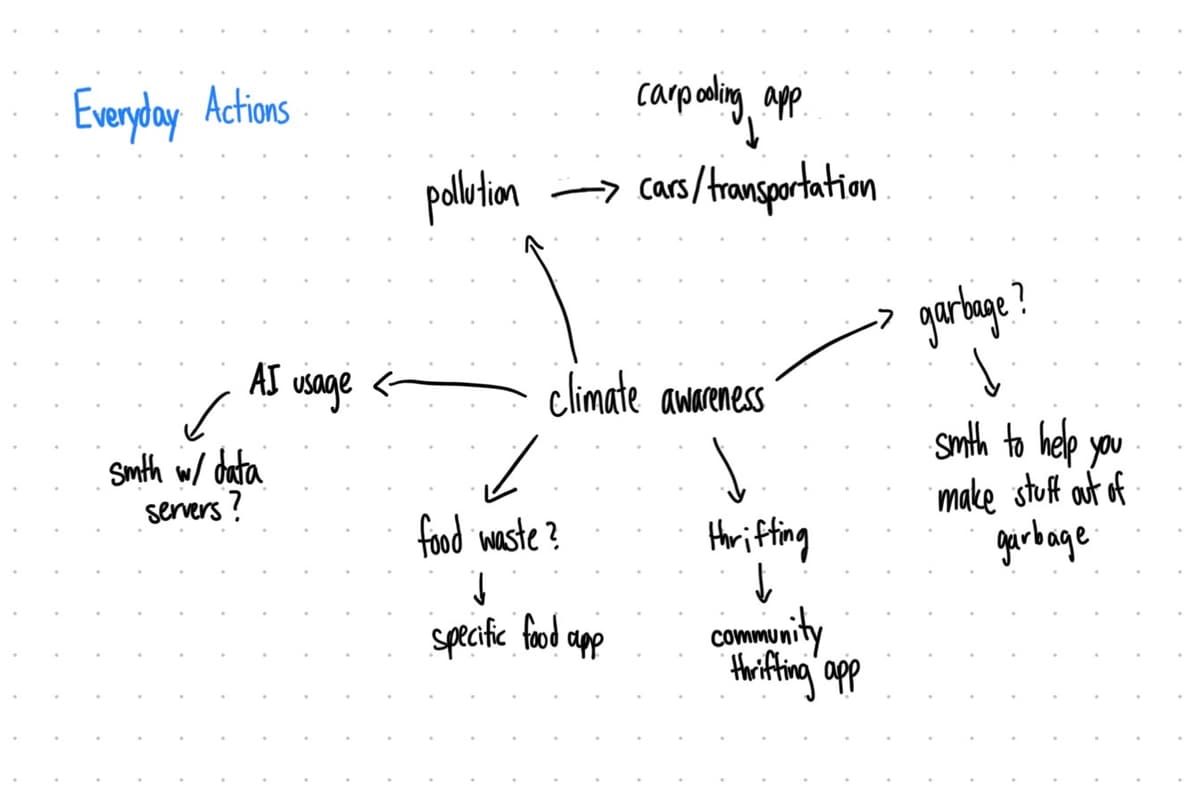
However, we wanted to step beyond these commonly explored areas and identify a less obvious problem space where meaningful impact is often overlooked.
rise of llms
Since November 2022, large language models (LLMs) have become mainstream, dominating our everyday lives.
With the rise of this technology, there have been growing concerns regarding its environmental impact, most notably the energy consumption required to train and run these systems at scale.
Furthermore, a key driver of this issue is the growing use of AI as a replacement for simple Google searches, increasing overall energy consumption for everyday queries.

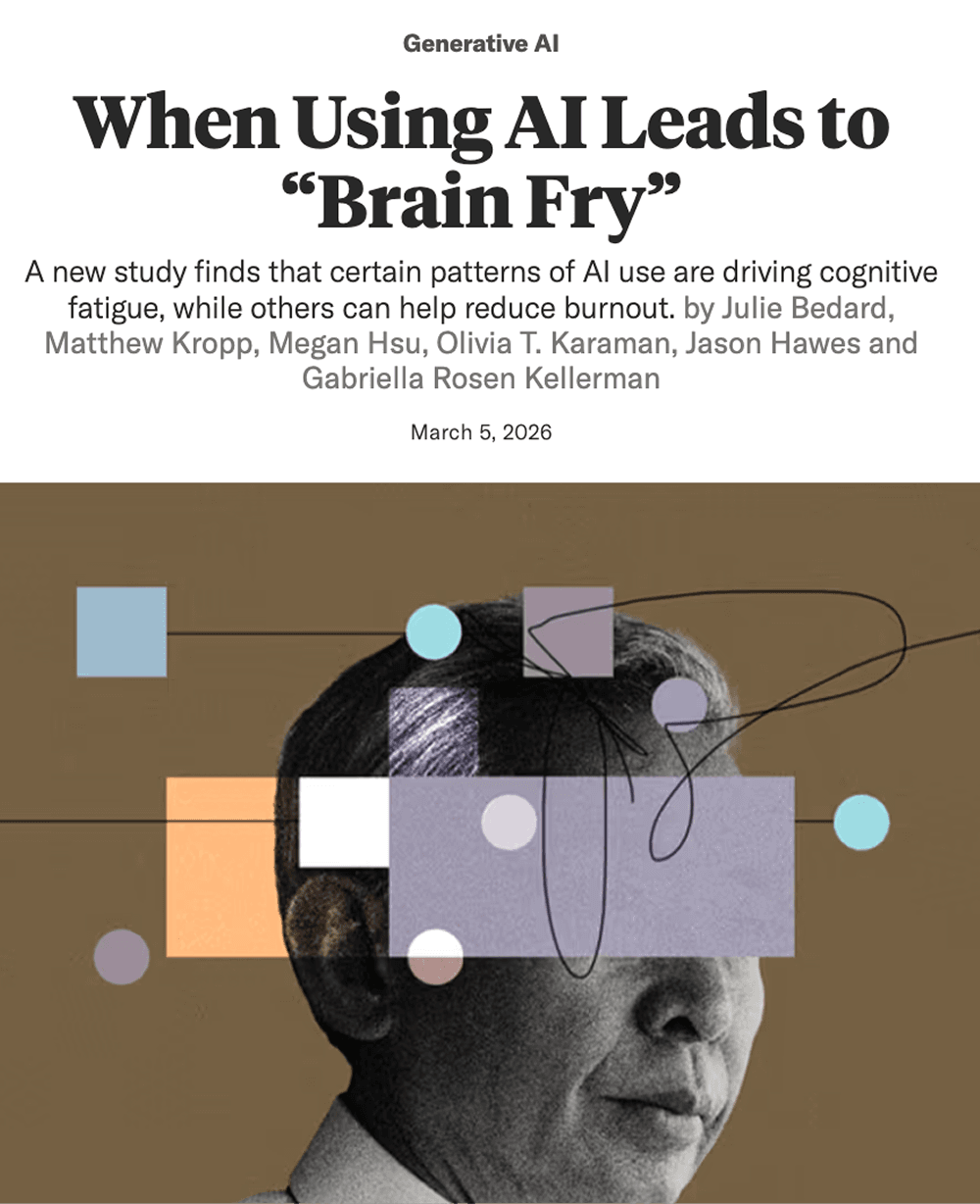
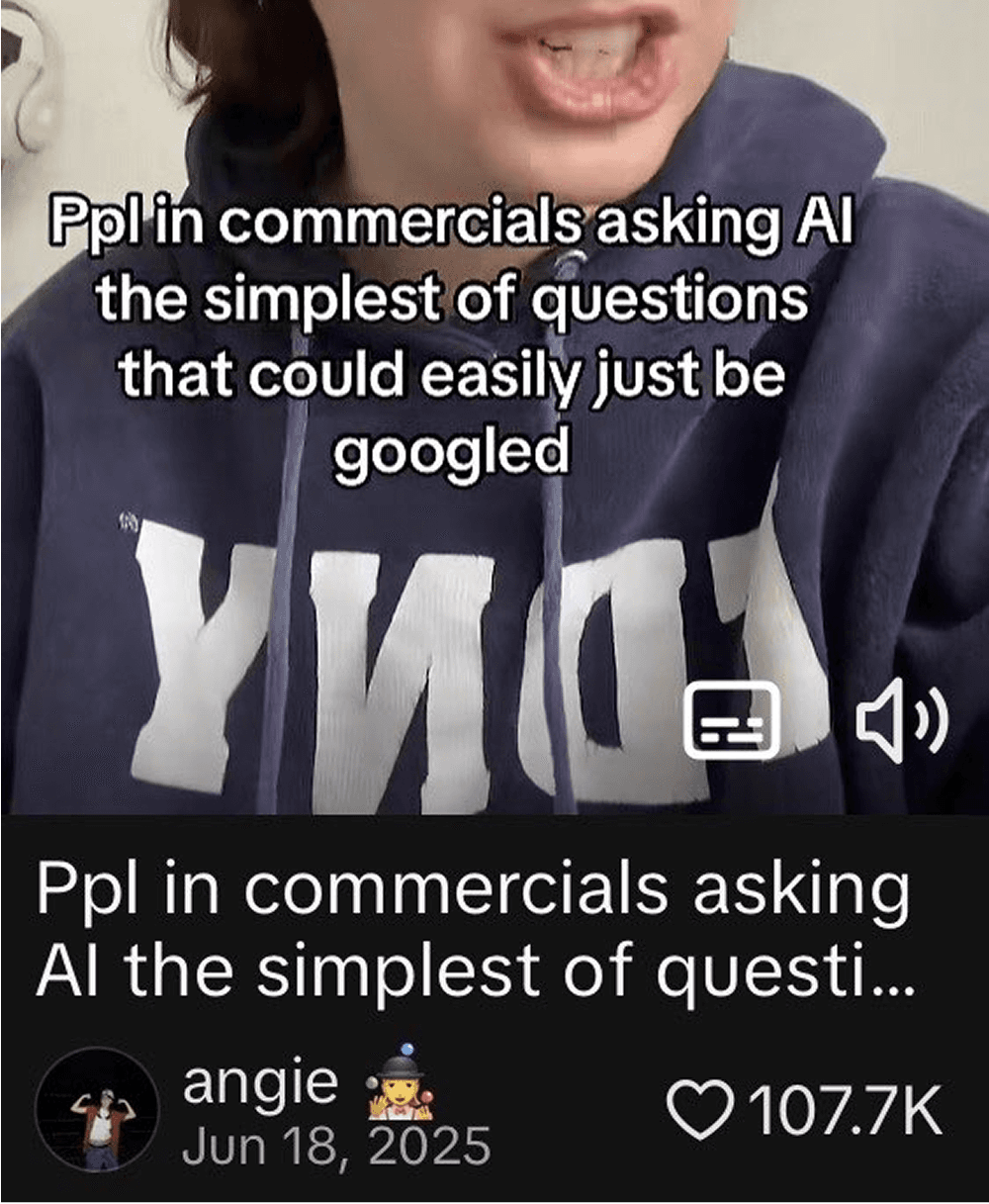
As AI becomes intertwined with everyday life, it’s projected that AI water usage could hit 6.6 billion m³ by 2027. As well, for every 10 ChatGPT responses, 500mL of water is consumed.
solution
My team and I wanted to brainstorm ideas to solve this problem. We came up with Ripple.
Picture this:
Let’s say you want to search more info into the Eiffel Tower using your favourite LLM like ChatGPT.
Well, instead of creating a new prompt to send, Ripple searches through previously asked prompts relevant to the Eiffel tower, and resurfaces its answers, eliminating the need for additional AI usage.
Ripple reduces the environmental impact of AI by reusing existing answers instead of generating new ones, saving energy and water used by data centres.
If Ripple cannot find a previously asked prompt that matches the user’s request, Ripple serves as an LLM, however only relying on efficient and low-cost models.
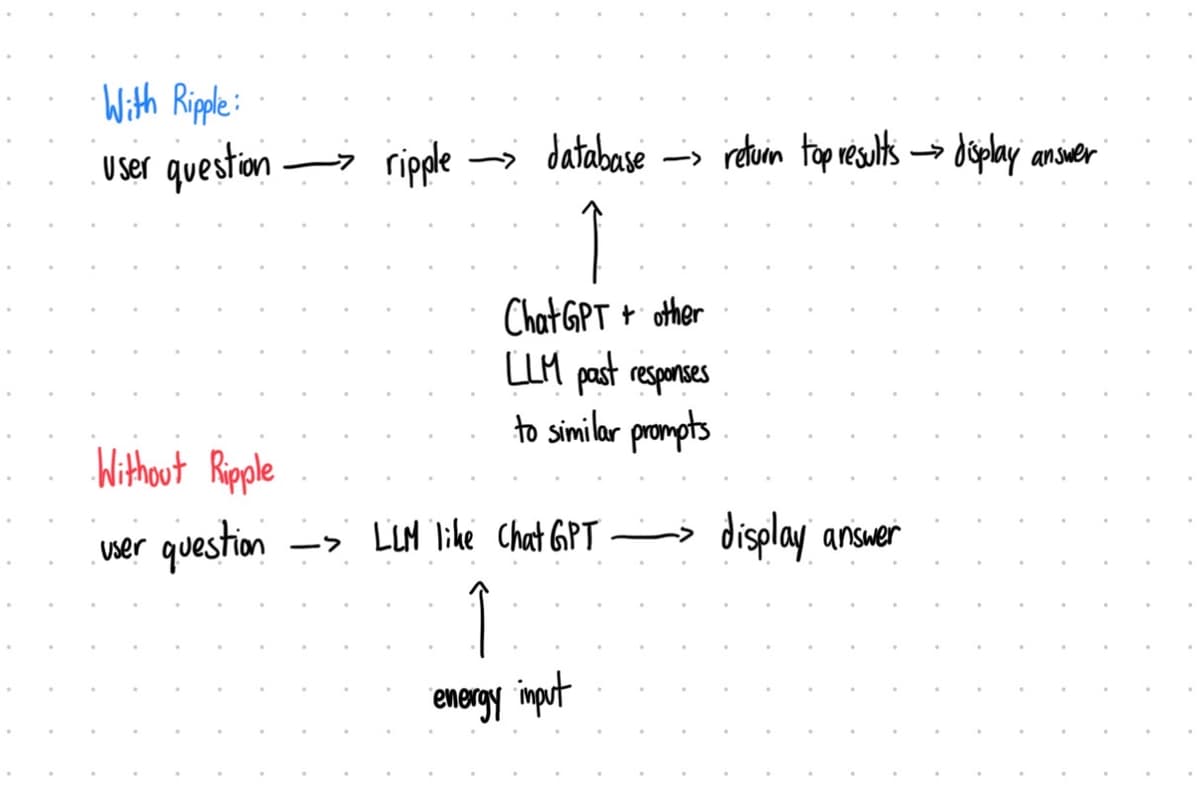
We know that telling people to stop using ChatGPT is unrealistic and unfeasible. So instead of forcing people to stop, why don’t we redefine what it means to use an LLM? Ripple aims to make AI a more sustainable tool to make sustainable action seamless in one’s day to day life.
In a world where AI is becoming increasingly unavoidable, the right response is not to avoid AI, but rather adapt and address the pressing environmental issues it causes.
home page
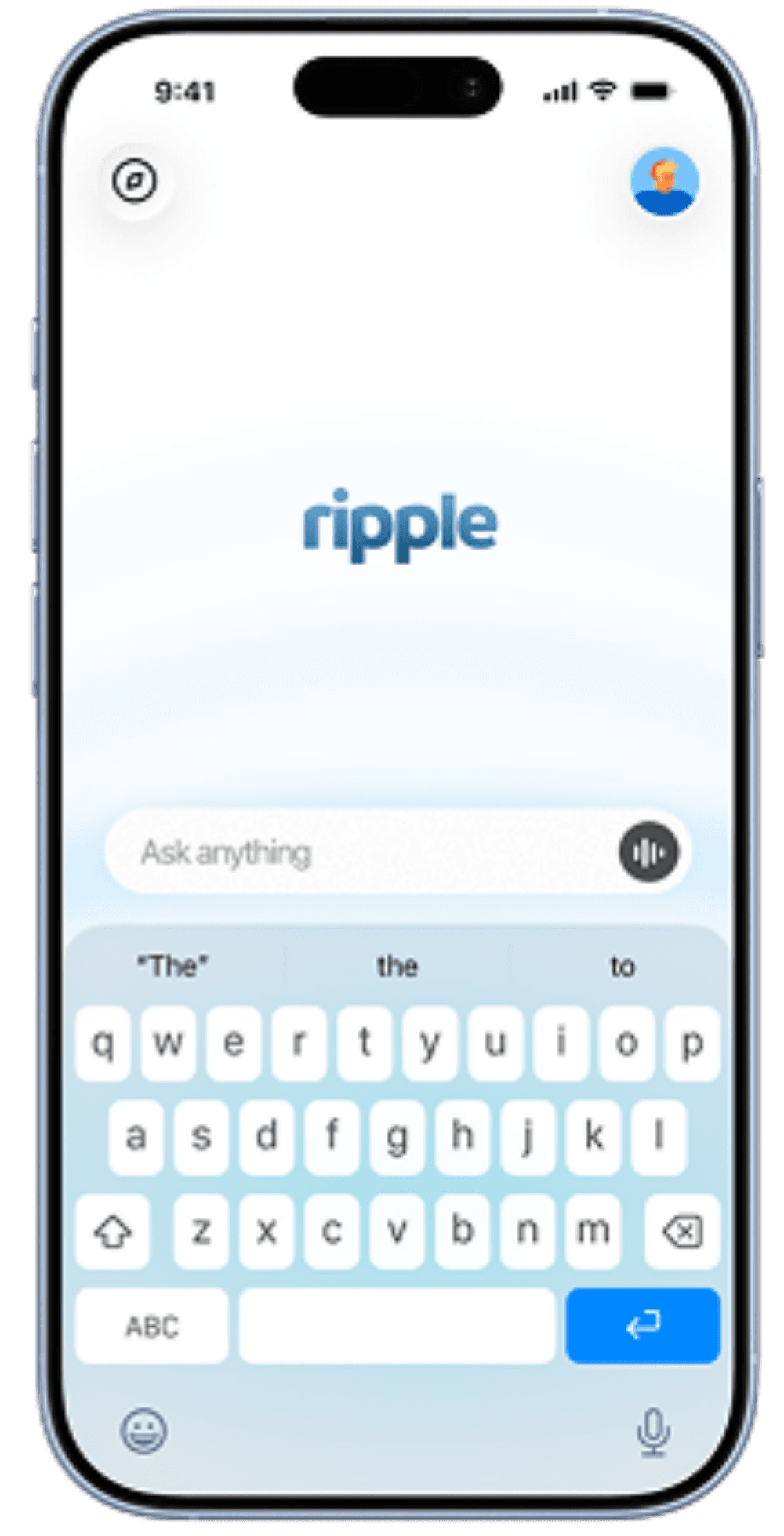
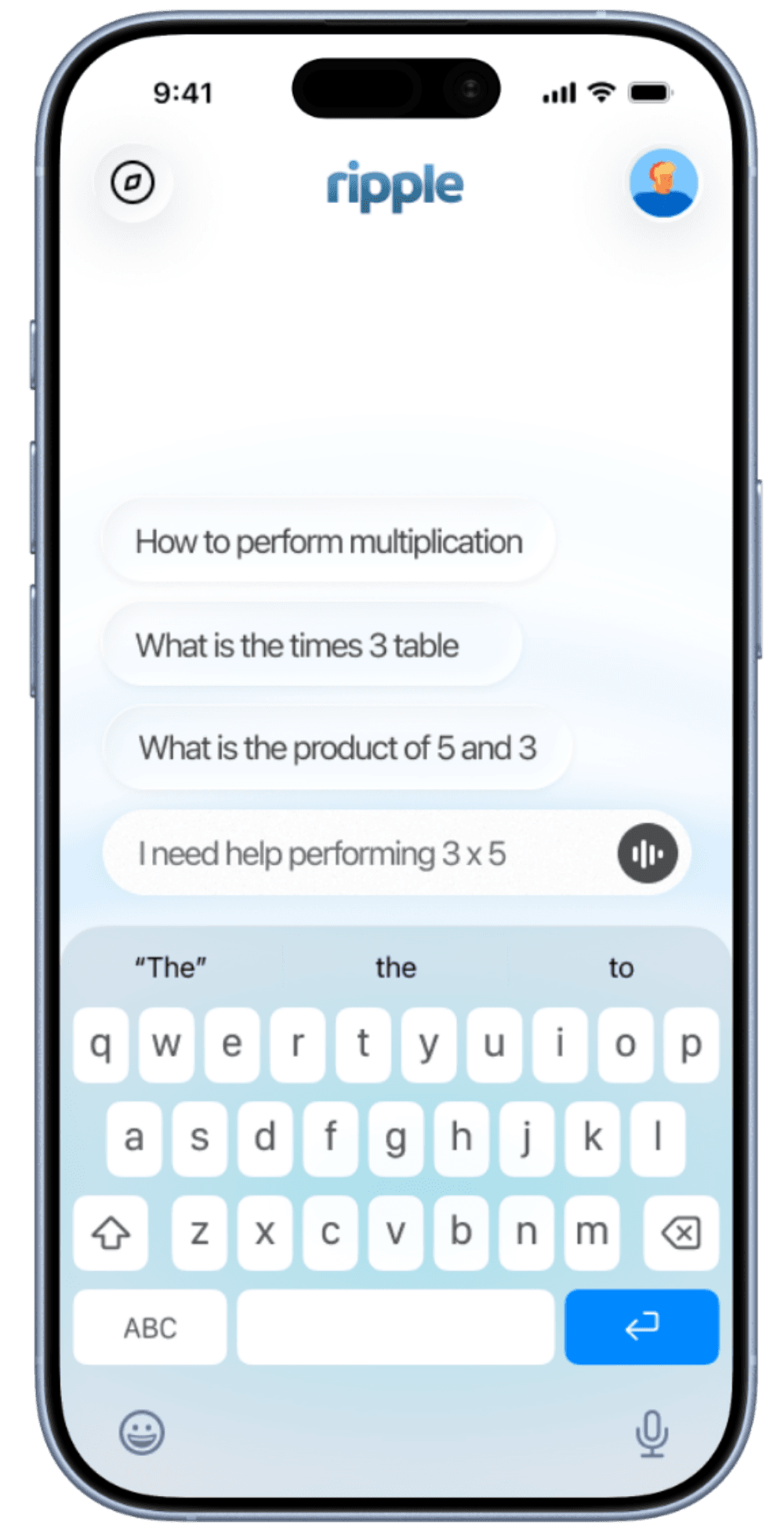
On the home page, users are greeted by a familiar “ChatGPT-like” user interface. This was done so intentionally so that users immediately know what to do as it mimics the flow of an actual LLM.
Once a user types in their “prompt”, ripple surfaces existing answers from previously asked prompts, allowing users to select the one that matches their best request.
answer page
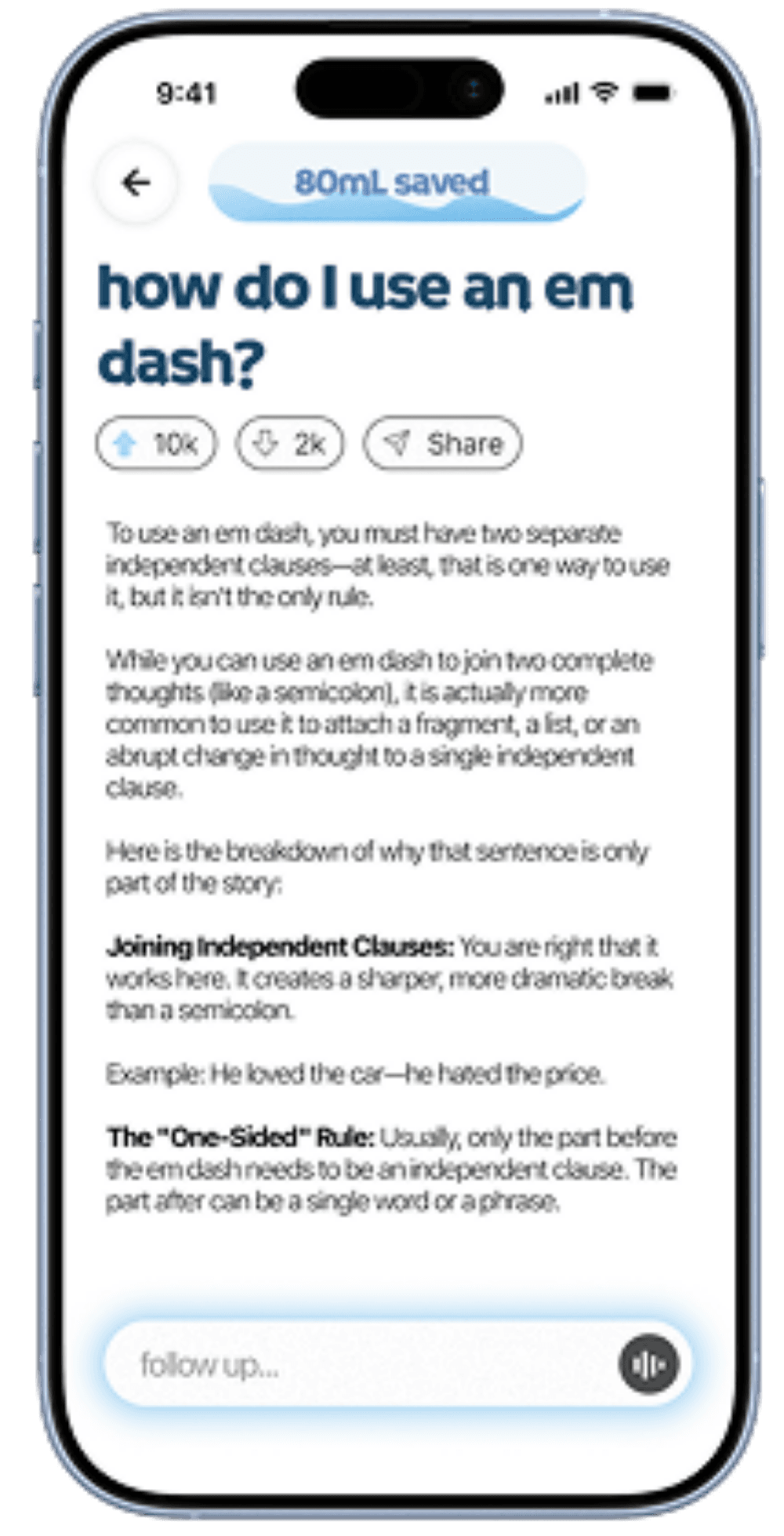
Once a user selects the answer they want to view, they are able open up Ripple’s resurfaced prompt and answer. There, they can view directly how much water they saved as well as ask any follow up questions.
Ripple also has an upvoting and downvoting feature, which serves as its algorithm to learn what answers are the most relevant
discover page
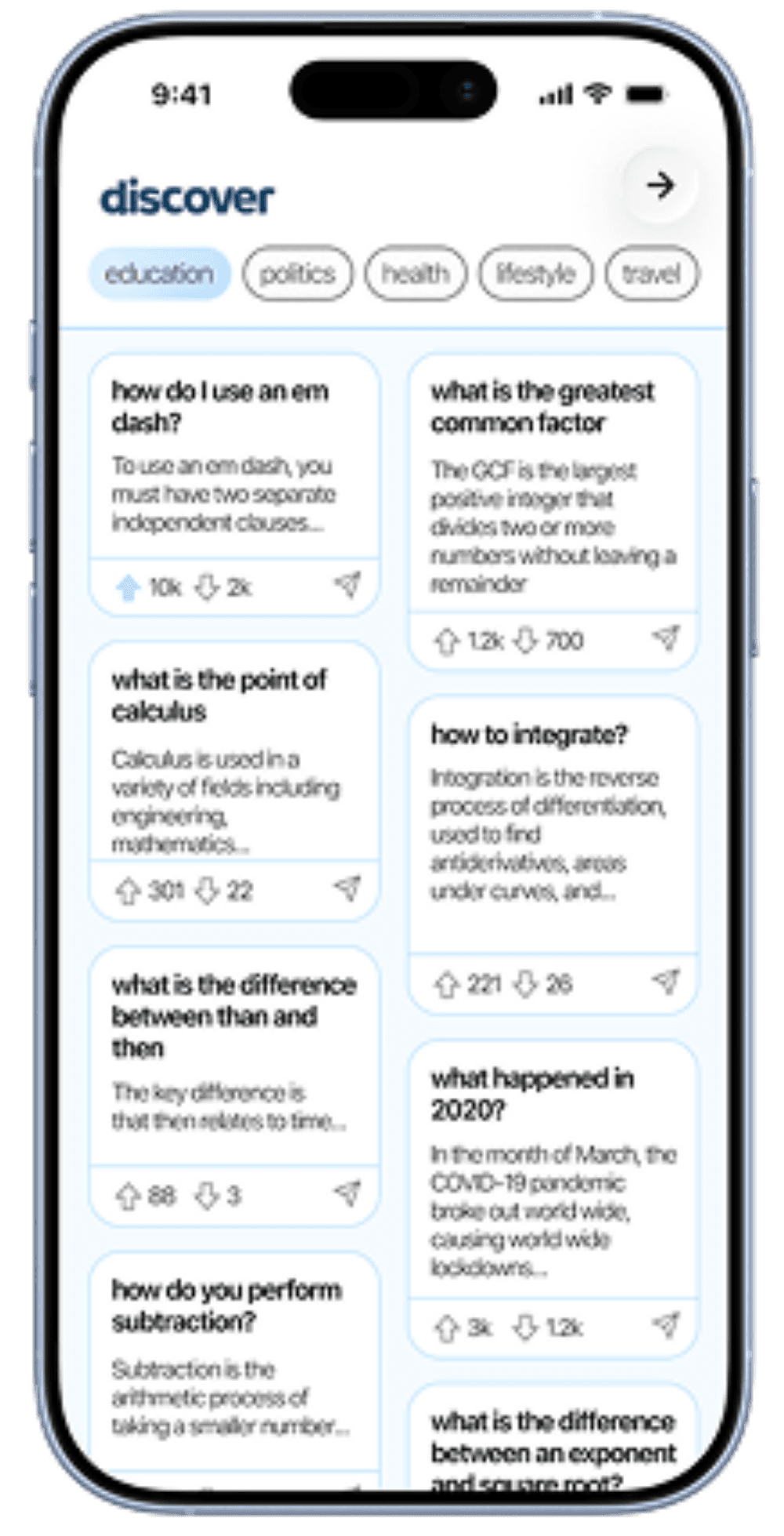
Ripple also features a discover page (inspired by Ditto Lists) where users can browse previously asked prompts, encouraging people to learn from existing knowledge instead of generating new responses.
If a user wants to learn more English, for example, they are able to select the education category to filter past prompts that are related to education. There, they can browse past knowledge that LLMs have already provided.
profile page
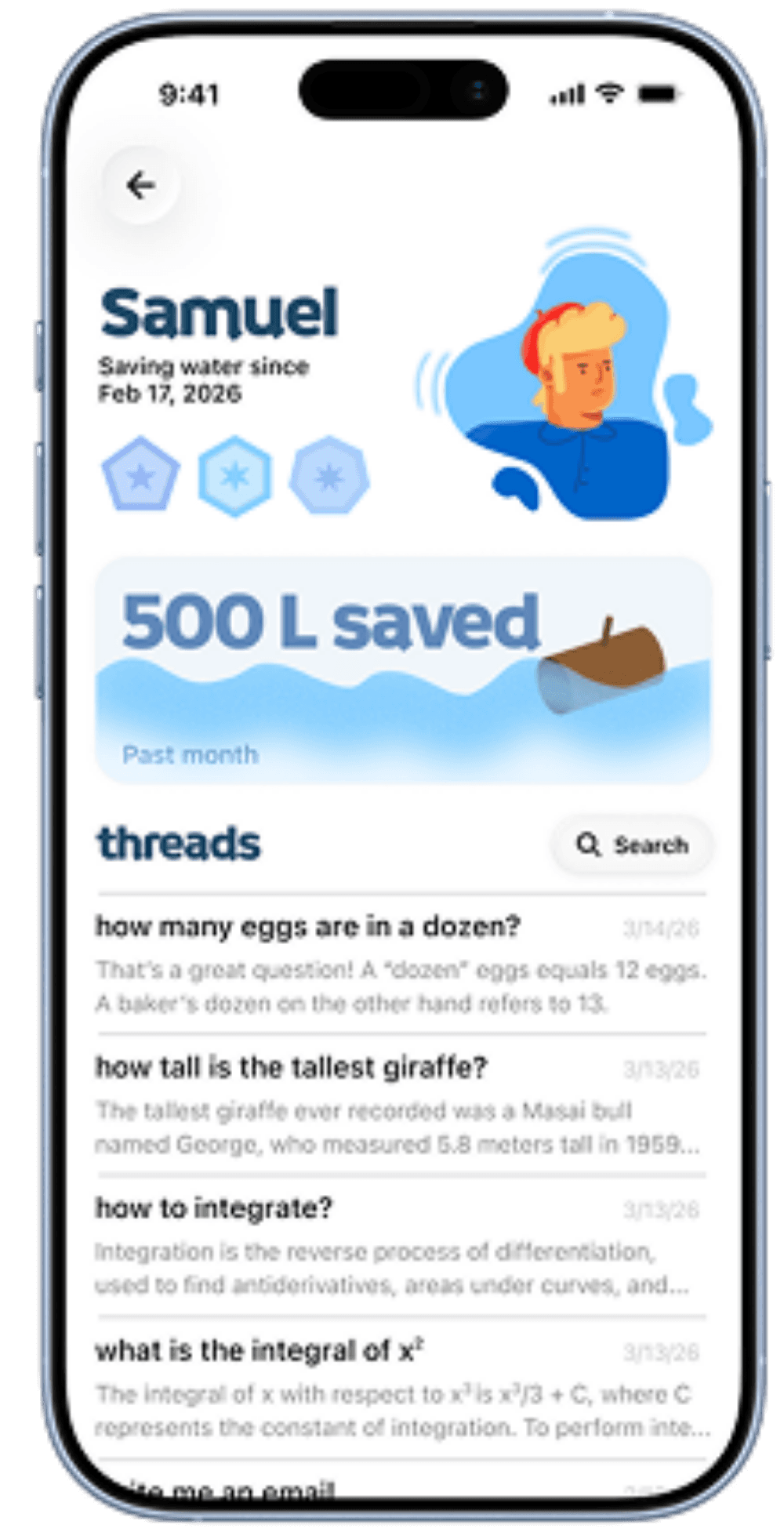
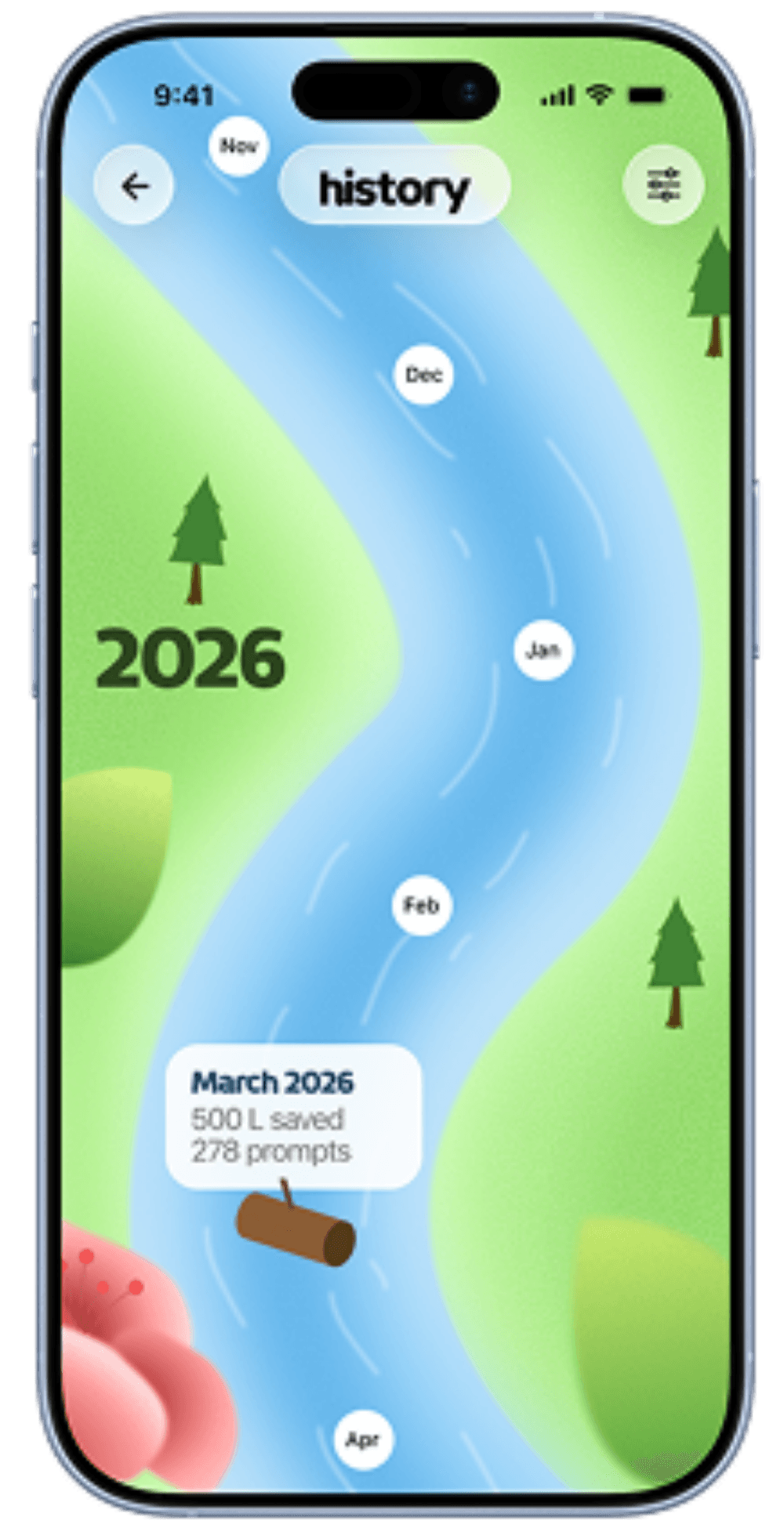
Finally, on the profile page, you are able to view how many litres of water you’ve saved in the past month. Ripple also provides a more in depth look into your history through a river stream graphic that represents the past history of your water usage.
On the home page you’ll also find past prompts and their answers that you’ve viewed, enabling easy access.
prototype
key learnings
If you’ve read all the way here, I think it’s probably important to note that Ripple probably isn’t feasible at this time. To implement Ripple in the real world, you’d need to collect and store all this data generated from millions of prompts that are being asked every day.
However, Ripple was made to ideate and think upon a hopeful future in which LLMs might be a more sustainable piece of technology.
reflections
🥉 We placed third at Bloom Designathon!
Ripple taught me so many valuable lessons, most importantly:
1. Before designing, it’s worth spending a few hours (even if you only have 7.5 hours in total) to think of the problem statement and a unique solution
2. It’s okay to sometimes dream big and come up with a crazy solution. Creativity >>>
3. Figma is SLOW when you have a bajillion graphics all in one page (or maybe it’s just my laptop)